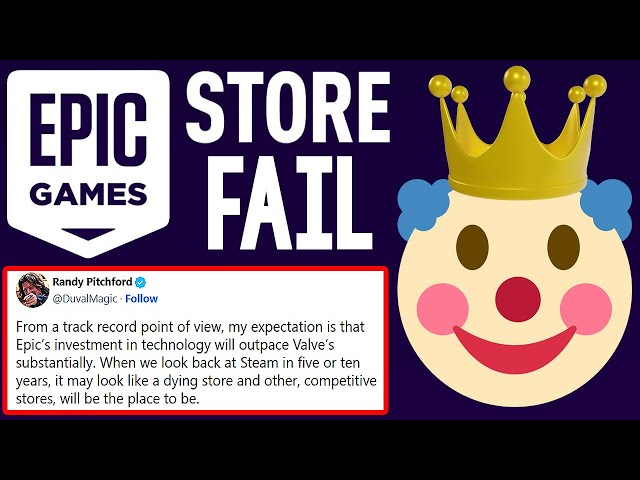
Epic Game Store: Cracks in the Steamroller?
Introduction
For years, Steam has reigned supreme as the undisputed king of PC gaming. The platform’s vast library, user-friendly interface, and robust community features have cemented its place in the hearts of gamers worldwide. But then, in late 2018, a challenger emerged: the Epic Games Store (EGS). Backed by the behemoth that brought us Fortnite, EGS entered the arena swinging, promising lower revenue cuts for developers and a curated selection of free games for users. But has this “steamroller” truly dented Steam’s armor? Or are we starting to see cracks in the Epic facade?
The Initial Assault: A Bold Strategy
Epic’s strategy was aggressive, to say the least. They focused on securing timed exclusives, offering developers a more favorable 88/12 revenue split (compared to Steam’s standard 70/30), and luring players with a steady stream of free titles – often AAA hits. This initial onslaught certainly made waves. Gamers were drawn in by the promise of freebies and the opportunity to play highly anticipated games that weren’t available on Steam. Developers, naturally, were intrigued by the potential for increased revenue.
Short-Term Gains, Long-Term Pains?
In the short term, this strategy undoubtedly worked. EGS quickly amassed a sizable user base and gained significant market share. The exclusive deals generated buzz and drove traffic to the platform. However, the long-term sustainability of this approach is now being questioned.
One of the most significant criticisms leveled against EGS is its lack of features compared to Steam. The user interface is often criticized as being clunky and unintuitive. There’s a limited community aspect, lacking features like user reviews, forums, and robust modding support, all of which are integral to the Steam experience. For many gamers, these features are not mere conveniences; they are essential components of the PC gaming ecosystem.
The exclusivity strategy, while initially effective, has also proven to be a double-edged sword. While some players are willing to switch platforms to play a specific game, others resent being forced to use a different launcher, particularly one perceived as inferior to Steam. This has led to accusations of anti-consumer practices and, in some cases, even boycotts of games exclusive to EGS.
Furthermore, Epic’s reliance on burning cash to acquire exclusives and offer free games is not a sustainable business model in the long run. While the Fortnite fortune provides a substantial war chest, questions remain about when and how EGS will achieve profitability without relying on these tactics. Recent shifts in strategy, like focusing on cross-platform releases, hints at a potential re-evaluation of their initial approach.
Cracks Appearing: What Now for EGS?
So, are we seeing cracks in the steamroller? The answer is complex. EGS has undeniably disrupted the PC gaming landscape and forced Steam to innovate. But to truly compete long-term, EGS needs to address its shortcomings and build a stronger foundation.
Solutions
Here’s how they can do it:
1. Enhancing the User Experience: Prioritize Functionality
EGS needs to invest heavily in improving its platform’s functionality. This means:
- Redesigning the User Interface: A cleaner, more intuitive interface is crucial. Look at successful e-commerce platforms for inspiration on navigation and discoverability.
- Implementing Community Features: Adding user reviews, forums, and modding support would significantly enhance the user experience and foster a sense of community.
- Improving Download and Installation Management: Streamlining the download and installation process is essential for a smooth user experience.
2. Building a Sustainable Business Model: Beyond Exclusives
Relying solely on exclusive deals and free games is not sustainable. EGS needs to:
- Attract a Diverse Range of Games: Focus on attracting a broader range of games, including indie titles and niche genres. Offer competitive terms to developers, but don’t solely rely on exclusivity.
- Develop Value-Added Services: Explore offering subscription services, cloud gaming, or other value-added services that can generate recurring revenue.
- Embrace Cross-Platform Compatibility: Prioritize cross-platform compatibility to allow players to connect with friends regardless of their chosen platform.
3. Fostering Trust and Transparency: Addressing Concerns
Addressing community concerns is critical for building trust and loyalty. EGS should:
- Engage with the Community: Actively listen to feedback and address concerns raised by players.
- Be Transparent About Business Practices: Be open and honest about the company’s business practices and future plans.
- Prioritize User Privacy: Ensure robust data privacy measures are in place to protect user information.
Alternative Approaches: A Multi-Faceted Strategy
Here are a few alternative approaches EGS could consider:
- Partnerships: Collaborating with other gaming platforms or content creators could expand reach and attract new users. Imagine partnerships with streaming platforms or hardware manufacturers.
- Focus on Niche Markets: Instead of trying to compete head-to-head with Steam on every front, EGS could focus on serving specific niche markets, such as indie games or VR content.
- Developer Tools and Services: Offering advanced developer tools and services could attract more developers to the platform, creating a stronger ecosystem.
Case Study: Discord’s Success
Discord, initially a voice chat platform for gamers, has successfully evolved into a comprehensive community hub. They achieved this by listening to their users, adding features that met their needs, and fostering a strong sense of community. EGS could learn from Discord’s success by prioritizing user feedback and building a platform that caters to the specific needs of PC gamers.
Conclusion: A Chance to Evolve
The Epic Games Store has undoubtedly shaken up the PC gaming landscape. While its initial strategy of aggressive exclusivity and free games generated significant buzz, the long-term sustainability of this approach is now being questioned. The cracks in the “steamroller” are beginning to show.
However, this is not a death knell for EGS. By focusing on enhancing the user experience, building a sustainable business model, and fostering trust and transparency, Epic can address its shortcomings and position itself for long-term success. The challenge lies in adapting and evolving from a disruptor to a genuine competitor, one that offers a compelling alternative to Steam based on merit, not just temporary incentives.
The future of PC gaming is not a zero-sum game. There is room for multiple platforms to thrive, provided they offer unique value propositions and cater to the diverse needs of gamers. EGS has the potential to become a valuable part of this ecosystem, but it needs to shift gears and focus on building a platform that is both functional and engaging. The ball is now in Epic’s court. Let’s see if they can rise to the challenge.